Paola Delarosa-Lloret
M.S. Instructional Design, Development & Evaluation

Cognitivism
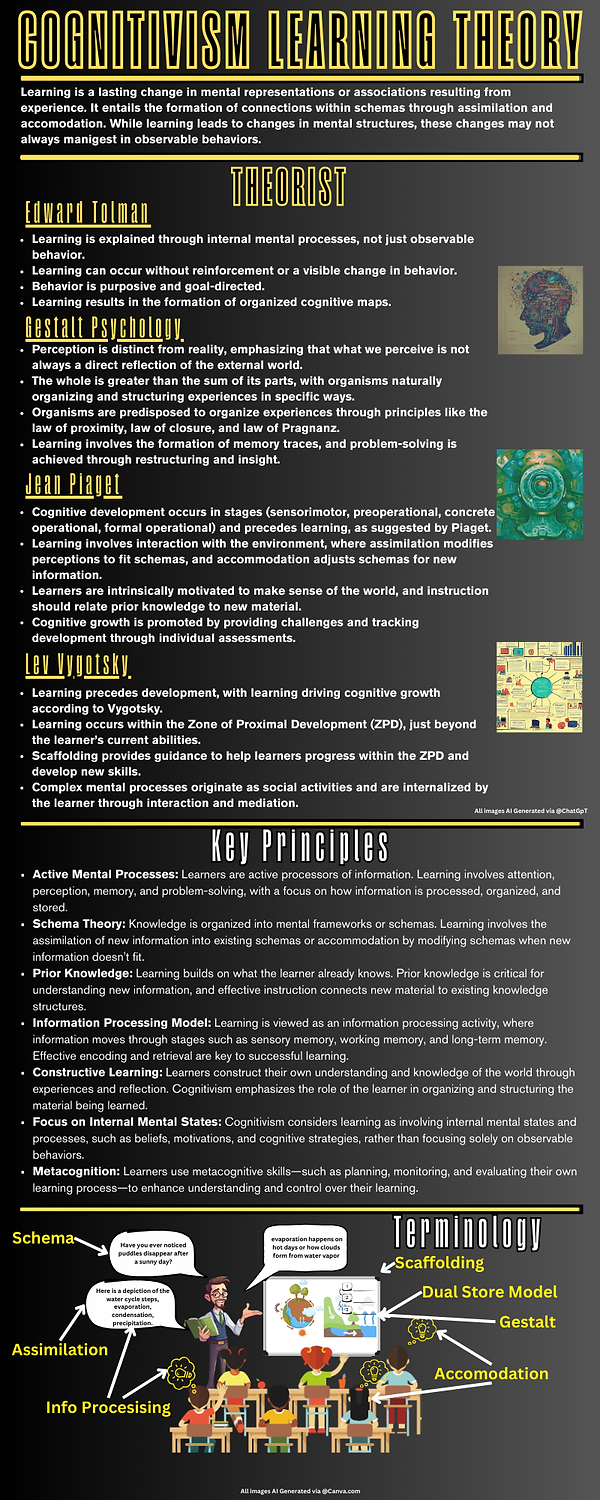
Cognitivism Learning Theories
Come with me to learn more!


Cognitivism Inspired Instructional Design Theories
.png)
Come with me to learn more!
Cognitivism - Learning Scenario
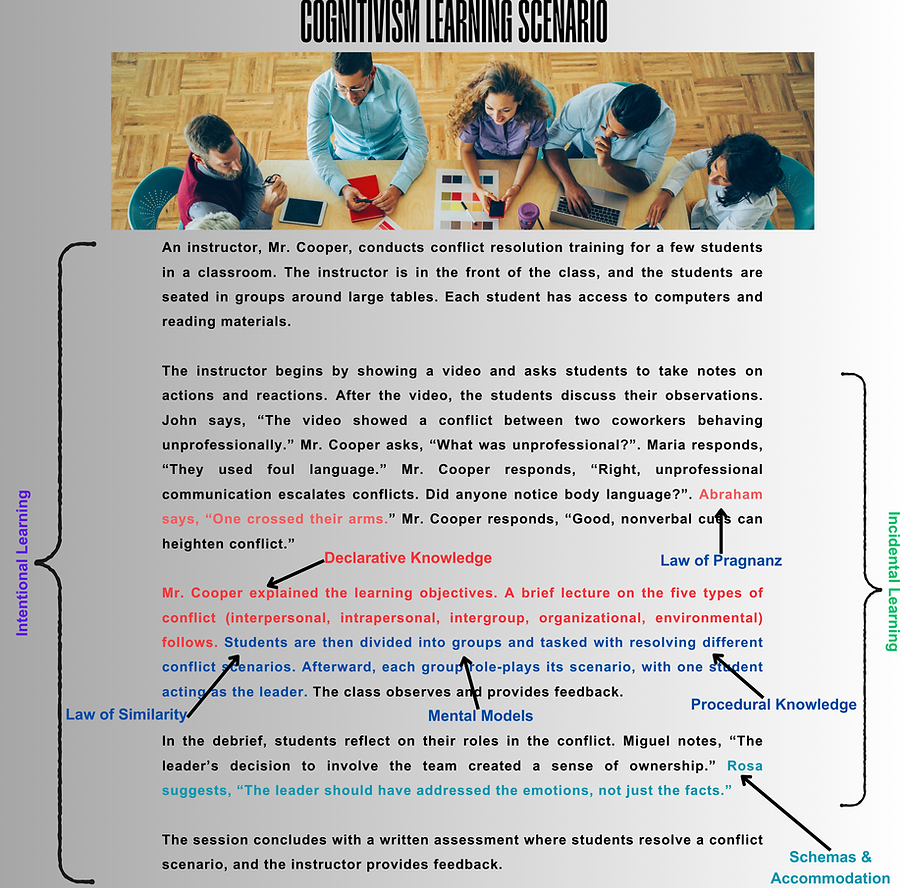
Cognitivism - Observational Checklist


Reflection
Cognitivism stood out because it emphasizes the internal mental processes involved in learning, such as memory, perception, and problem-solving. Unlike behaviorism, which focuses on observable behaviors and external stimuli, cognitivism delves deeper into how learners acquire, organize, and store knowledge. This theory plays a key role in instructional design by encouraging learning experiences that promote active information processing. The works of theorists like Jean Piaget, Jerome Bruner, and David Ausubel highlight the importance of schemas, cognitive structures, and prior knowledge, making cognitivism highly effective in fostering meaningful learning.
One key influence of cognitivism on instructional strategies is its focus on understanding rather than rote memorization. For example, advanced organizers help learners connect new information to their existing knowledge, enhancing retention and comprehension. Similarly, Gagné’s Nine Events of Instruction provides a structured approach that engages learners' cognitive processes, improving how information is processed and stored in long-term memory. Practical tools like concept mapping, chunking, and contextualizing information align well with cognitive principles, promoting deeper learning.
Despite its strengths, I still consider the potential limitations of cognitivism, especially in dynamic or social learning environments. Does a cognitivist approach sufficiently address the social and emotional aspects of learning, or should it be supplemented with theories like Social Learning Theory or Constructivism? While cognitivism offers a robust framework for understanding how learners process information, it may overlook the collaborative nature of learning emphasized by theorists like Bandura, who highlight the importance of observation and interaction. Constructivism’s emphasis on learners actively constructing their understanding from experience also presents an exciting contrast, focusing more on how learners make sense of information rather than simply processing it.
Exploring cognitivism has shaped my understanding of learning and instructional design. I now recognize the critical role of mental processes in how learners engage with and retain information. Instructional strategies that emphasize clear organization, scaffolding, and meaningful connections between new and prior knowledge have become essential to my approach to teaching. However, I also see the value of a holistic approach that integrates cognitive, behavioral, and social learning strategies to meet diverse learning needs. By balancing these theories, I can design learning experiences that promote mastery and foster critical thinking, problem-solving, and collaboration.